Prof. Mangano attends UNCITRAL Conference on Harmonizing law in the age of digital trade and finance
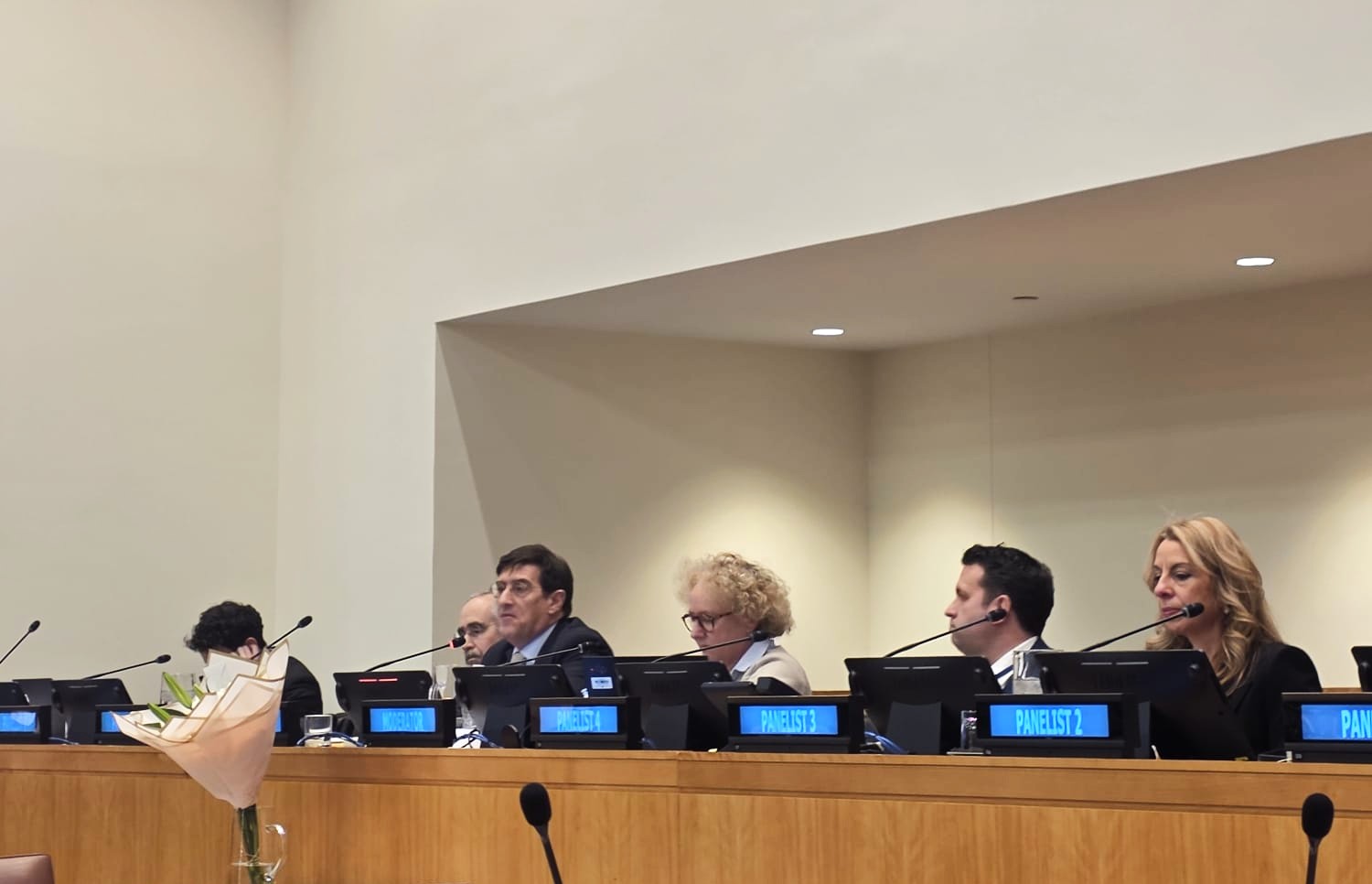
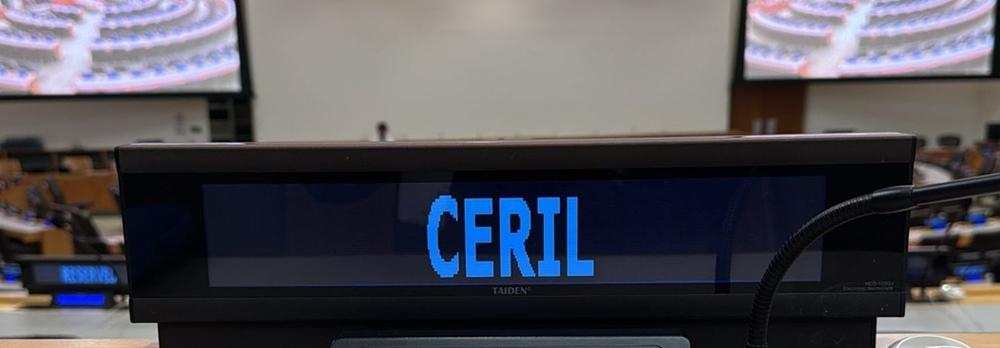
From Tuesday 10 to Friday 13 February 2026, UNCITRAL organised a conference on 'Harmonizing law in the age of digital trade and finance'. This conference, hosted in New York, aimed to bring digital trade and finance together. In the words of UNCITRAL such a challenging task reflects 'that digital trade is increasingly characterized by new types of assets, new ways of trading and financing trade, and a shared dependence on data and digital ecosystems.' Participating on behalf of CERIL, Prof. Mangano contributed to the first part of the conference which dealt with digital assets and secured financing, where he spoke in the panel on exploring other types of assets and transactions.
The conference brought together participants from governments, international and regional organizations, academia and the private sector, exchanging views on topics for possible future work by UNCITRAL Basically, the idea at the core of the conference consisted in exploring whether the UNCITRAL Model law on Secured Transactions (MLST) needs to be amended to be accommodated to the increasingly overwhelming digital environment. Moreover, in the second part of the conference it was discussed whether digital platforms deserve an apt model law that takes into account technology, contract law and private international law, respectively.
This four-day conference which was highly participated, touched upon both the main topics covered by the MLST and most important forms of technological innovations cropped up in the field of trade and finance. The speakers articulated various and variegated opinions and, unsurprisingly, gave rise to a lively and constructive debate. Most participants were nevertheless in favour of a MLST amendment, while only a few scholars voiced concerns about such an operation.
Prof. Mangano dealt with digital receivables finance and expressed, in general, support for amending the MLST and even transforming the digital challenge into an opportunity to better “regulate” secured transactions. With specific reference to receivables finance, Prof. Mangano suggested that, on the one hand, UNCITRAL should adopt the concept of control over digital assets that had been elaborated by UNIDROIT in their “Principles on digital assets and private law” and, on the other hand, that UNCITRAL should set the conditions whereby the point in time when a subject has achieved control over a digital asset may be considered as certain and transparent. Prof. Mangano went on to discuss that in some blockchains traditional forms of registration are not feasible. Furthermore, in the same ecosystems the exact determination of the point in time of control may be regarded functionally equivalent to traditional registrations. As a result, the exact determination of the point in time when a subject has achieved control over a receivables digital asset ought to ensure both the effectiveness of the transaction towards third parties, and its priority over other conflicting operations.

Comments
Log in to read and post comments